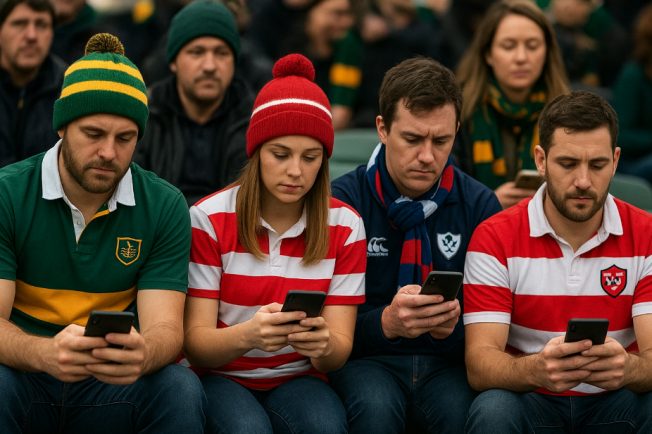
Rugby halftime is short—15 minutes that feel like a breath in the middle of a storm—and fans have turned that breath into a digital ritual. As soon as the whistle goes, phones pop up across stands, pubs, and living rooms. Supporters aren’t checking out of the game; they’re leaning further in, using the break to grab context, trade reactions, and ride the momentum online. What happens on screens in those 15 minutes has become part of the modern match-day experience, shaping how people feel about the first half and what they expect from the second.
1. The 15-Minute Digital Sprint
Halftime in rugby is a hard cap of 15 minutes, so fans treat it like a sprint, not a stroll. The second the clock stops, attention shifts to the phone with almost no friction. It’s a quick hunt for what mattered most in the first half, what the wider crowd thinks, and what the match might be turning into. The break is too short for deep reading, so the behavior is sharp and efficient: scroll, react, share, repeat. Rugby’s pace makes that feel natural—same intensity, new channel. The halftime phone habit isn’t random; it’s a response to a sport that moves fast and leaves big questions hanging.
2. Twitter/X for Live Commentary and Memes
Twitter/X is still the quickest pulse-check for rugby chatter during the break. Fans jump in to see instant jokes, referee debates, and tactical threads that explain the chaos of the first half in plain language. The timeline becomes a shared couch where supporters laugh at memes, argue over scrum calls, and repost alternate angles as soon as they surface. Rugby culture thrives on wit and rivalry, and X compresses that into a rolling match-day story that updates every second. By the time players return, the online conversation has already crowned heroes, villains, and moments-of-the-half.
3. WhatsApp Fan Groups Lighting Up
WhatsApp is the private clubhouse for rugby supporters, and halftime is when it turns electric. Group chats go from quiet to wildfire—friends, family, old teammates, and club circles firing off reactions in rapid bursts. Because the space is closed and personal, the talk is unfiltered: hotter takes, more inside jokes, and plenty of “how did he not see that?” energy. People swap mini-recaps for anyone who stepped away, and they argue through the half in a way that feels like standing together on a terrace. The phone becomes less a device and more a doorway into the people you watch rugby with, even when you’re apart.
4. Facebook Communities and Bigger Fan Bases
Facebook still plays a real role in rugby halftime, mostly because the sport is rooted in community identity. Fans check big groups linked to clubs, regions, schools, or national sides to see match threads, polls, and longer debates that don’t fit the speed of X. The vibe feels like a virtual pub: supporters mixing analysis with nostalgia, celebrating gritty forward work, or re-litigating a controversial call with screenshots and slow-motion clips. It’s not the fastest platform in the break, but it’s a steady one—where belonging matters as much as the scoreline.
5. TikTok’s Rise as Halftime Entertainment
TikTok is growing fast in rugby fandom, and halftime is its perfect entry point. The break gives just enough time for a quick scroll through punchy highlights, creator reactions, and clever edits. Rugby clips—monster tackles, line breaks, sideline celebrations—fit TikTok’s snack-size style, and a lot of teams and players now post there specifically to catch fans during stoppages. For younger supporters especially, TikTok isn’t secondary; it’s a primary route to the game’s most shareable moments. Five minutes on the app can feel like a whole highlight package.
6. Trending Highlights and “Second-Half Clues”
A big chunk of halftime phone use is about finding what’s trending and figuring out why. Fans want to know which moment is blowing up—was it a try that looked suspicious, a hit that crossed a line, or a tactical shift nobody spotted live? Social feeds serve fresh clips and alternate angles that TV might not replay yet, which gives supporters a sense of insider knowledge before the second half begins. In-stadium fans often add their own videos to the mix, so the match lives in two broadcasts at once: the official one and the crowd-sourced one.
7. Social Media as Real-Time Rugby Culture
Rugby has always been social—chants, rivalries, and the post-match stories that last longer than any scoreboard. Halftime just extends that culture online. The break becomes a mini-festival of shared identity: praising the workhorses who never trend on TV, teasing opponents when they wobble, and celebrating the odd, beautiful chaos that makes rugby rugby. Phones aren’t pulling fans away from the moment; they’re multiplying the moment by letting people experience it together, react together, and shape the narrative in real time.
8. Betting, Predictions, and Staying Connected
Halftime can also spark curiosity about what comes next, especially when a match feels balanced on a knife edge. Some fans use the break to scan match predictions or compare odds, occasionally browsing platforms that also feature the top online casino UK rankings—though for most, the goal is simply to stay connected and react in real time. The behavior is usually quick: a glance at projections, a comment in a group chat, then straight back to highlights and conversation. In rugby culture, that predictive itch tends to be a side quest, not the main plot.
9. Why Halftime Phone Use Feels So Natural
The first half of rugby rarely gives neat answers. It leaves tension, open debates, and tactical puzzles that fans want to solve together. Phones fill that gap by giving instant feedback loops: confirmation from other watchers, replay angles, expert threads, and the emotional temperature of the crowd. Rugby is too complex to watch passivelyv, so halftime becomes the natural moment to verify what you think you saw. The second screen helps supporters turn messy sequences into a coherent story they can carry into the next 40 minutes.
10. What This Means for the Future Fan Experience
Halftime habits show where rugby fandom is headed: faster, more social, and more creator-driven. Leagues and broadcasters are already leaning into this reality with better social clips, live community threads, and second-screen features designed for the break. Expect tighter integration going forward—instant TikTok reels timed for halftime, curated X conversations, and smarter fan hubs that keep club communities buzzing. If the 15-minute break is this digitally alive now, the next few seasons will make halftime feel like an online arena that’s as meaningful as the pitch itself.
This is a submitted article