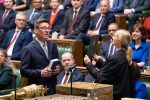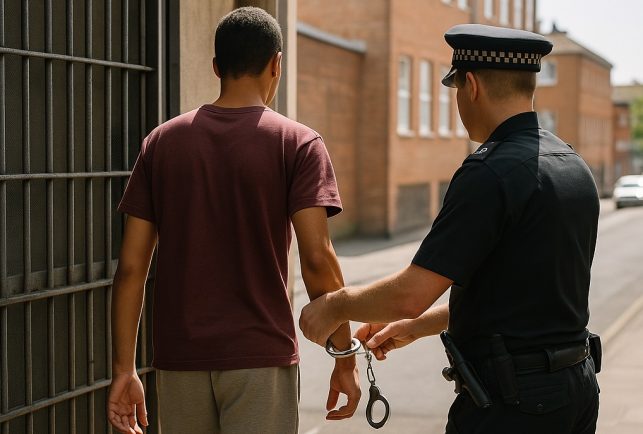
Prime Minister Andy Burnham has ordered a halt to the early release of prisoners in England and Wales after weeks of pressure from opposition MPs, victims’ families, and campaigners.
Nick Timothy, the shadow justice secretary, said the Prime Minister had “bowed to Conservative pressure” in pausing the scheme. But he argued the U-turn raised more questions than it answered, saying there were “no details at all” about what the pause meant in practice.
In a letter to Justice Secretary Alex Norris, he questioned how ministers could “pause” a scheme when the Sentencing Act itself imposes a “duty to release” offenders. There are, he noted, no exclusions for rapists, paedophiles, or killers. Labour and the Liberal Democrats had earlier voted down Conservative amendments that would have created such exclusions.
Kemi Badenoch, the Conservative leader, welcomed the pause but said it did not go far enough, arguing that Mr Burnham had only suspended part of the policy, pending yet another review, and that offenders were still being released early “today, every day.”
What it means locally
The scheme, due to begin releasing prisoners in monthly tranches from September 2, covers jails across the region, including HMP Long Lartin, the high-security prison near Evesham in Worcestershire, and HMP Hewell, also in Worcestershire, alongside category B and C prisons serving Warwickshire and the wider West Midlands.
Warwickshire’s police and crime commissioner, Philip Seccombe, has previously told the county council’s police and crime panel that capacity across the prison estate remained “near to the maximum capacity,” and confirmed that the county’s two police custody blocks had been put on standby to house prisoners if jail places could not be found elsewhere. West Midlands Police, under Police and Crime Commissioner Simon Foster, has likewise had to plan for the practical impact of releases on local officers and probation services, alongside forces across the country.
Under the scheme, as it stood before Thursday’s pause, serious offenders, including killers, rapists and child groomers, were eligible for release halfway through their sentences, rather than two-thirds of the way through, provided they had not committed serious breaches of prison rules, while those convicted of less serious offences could be freed as little as a third of the way through.
The decision
Mr Burnham’s intervention came amid outrage over the prospect that two of Pc Andrew Harper’s killers, Albert Bowers and Jessie Cole, could be freed halfway through their 13-year sentences for his manslaughter. The Prime Minister said no prisoners would be released under the scheme until the Government had carried out an urgent review and “done everything we can to minimise risk to the public.”
The move reversed a position taken by officials as recently as Wednesday evening, when the Ministry of Justice had insisted the scheme would still proceed in September, when around 700 prisoners were due to be freed nationally. By Thursday afternoon, Mr Burnham said he had instructed officials “to put a pause on the changes.”
Some 6,000 prisoners, including killers, rapists, and other violent offenders, had been set to be freed in monthly tranches from September 2. Neither Downing Street nor the Ministry of Justice has set a date for when the scheme might resume, if at all, saying this will depend on the review’s outcome. Alex Norris, the Justice Secretary, declined to pre-empt the review, telling victims: “Give us a little bit more time.”
Dame Nicole Jacobs, the domestic abuse commissioner, welcomed the pause, saying it would have seen “dangerous abusers released into the community without any protections in place for survivors.”
The wider campaign
Mr Timothy has previously described Labour’s early release scheme as “catastrophic,” warning that victims should not have to live in fear over the summer while waiting for a review, and that it would be “shameful” if the killers of Pc Harper, grooming-gang perpetrators, and rapists were released early under the plan. Earlier in the week, he had also pressed Mr Burnham publicly, asking why the Prime Minister, who said he wanted to stop the release of rapists and sex offenders due to begin on September 2, had “bothered to meet anybody from the Ministry of Justice.”
David Gauke, a former justice secretary whose report on sentencing helped frame the scheme for Labour, said there might be scope for “narrowly focused” exemptions, for example for violent offenders who had attacked police officers, but cautioned that there was “no easy way to draw a line” without leaving some controversial cases unresolved or substantially increasing the prison population.
Alex Chalk, another former justice secretary, said Labour should never have made the sentencing changes retrospective, arguing this had “pulled the rug” from under victims, and pointed to Australian-style dormitory prisons for lower-level offenders as a cheaper, faster alternative to conventional new-build prisons.
Reaction from victims and officials
Lissie Harper, Pc Harper’s widow, had earlier called it “deplorable” that releasing prisoners early was even being considered. Mark Fairhurst, chairman of the Prison Officers’ Association, backed calls for violent and sexual offenders to be exempted from the scheme, so that victims felt “justice has been served.”
Prison governors and officers have separately warned that reversing expectations of early release could cause a backlash inside jails, with inmates who had expected to be freed for family events now facing disappointment.
Officials have warned that prisons in England and Wales will run out of space by November if the early release measures are abandoned altogether, underlining the scale of the dilemma facing ministers, and the pressure now on prisons as the review continues.