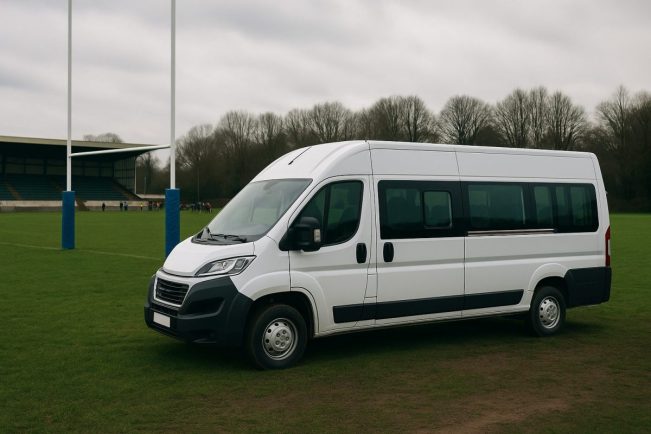
Across the UK, local rugby clubs face growing transport challenges when organising matches.
Managing player and staff travel often becomes an extra burden for volunteer organisers already balancing multiple responsibilities.
Community rugby events, from youth tournaments to senior league matches, typically involve transporting groups of varying sizes. While standard cars might suffice for smaller teams, larger squads and their gear often require more substantial vehicles. This transport dilemma affects clubs of all sizes, from established organisations with multiple teams to smaller community groups just getting started in local competitions, many of which explore budget-friendly transport solutions for local sporting events that match their size and resources.
Weather conditions, match schedules and accessibility needs can make the transport equation for rugby clubs even more challenging. Many are now considering dedicated transport options that provide flexibility, reliability and value for money, particularly as fuel costs and environmental considerations become increasingly important factors in decision-making.
Transport Challenges Facing Local Rugby Clubs
Rugby participation in Warwickshire has grown steadily in recent years. Local clubs report new members joining at junior and senior levels. As teams form and fixture lists expand, the demand on club resources increases, especially when arranging travel for squads to games across the region.
Amateur and youth rugby teams face significant logistical hurdles. Travel costs and vehicle logistics often fall on volunteers, forming a significant part of club budgets through fuel, hire, and maintenance.
Smaller clubs and school teams operate under tight financial constraints that limit their transport options. This financial pressure sometimes leads to reduced fixture lists or parents covering additional costs.
Environmental impact is now an important consideration for sports organisations. Several Warwickshire clubs have introduced transport-sharing schemes and reduced the number of vehicles per trip. Teams that coordinate shared minibuses for matches often notice lower emissions and reduced fuel costs, when navigating transport challenges on a budget.
Rugby Town FC balances away match transport by assigning a coordinator to manage a 17-seater for the first team and carpools for youth squads. This approach allows them to balance costs with reliability across all age groups.
Minibus Options for Rugby Team Transportation
When selecting transport solutions, rugby clubs must consider different vehicle configurations. A 9-seater minibus typically accommodates a small squad plus coaching staff. A 17-seater can transport an entire team including substitutes and support personnel. For clubs with multiple teams, larger vehicles offer more flexibility.
Accessibility features matter greatly for rugby teams. Wide-opening side doors, low entry steps, and sufficient headroom make boarding easier for players of all sizes. Storage capacity is equally important, with teams needing space for kit bags, training equipment, and medical supplies.
Fuel efficiency has become especially important for clubs with limited budgets. While modern diesel models offer solid fuel economy, newer hybrid options may deliver even greater efficiency for clubs focused on sustainability. Clubs can estimate potential savings by tracking match distances and comparing fuel consumption between vehicles.
Rugby clubs can find suitable vehicles through sports transport specialists, established dealer networks, or community transport schemes. Many clubs start their search looking into 9 to 17 seater minibuses for sale in the UK to compare options that match their specific team requirements.
Standard vs Specialised Rugby Team Vehicles
Teams need space for bulky items like tackle bags, training cones, and medical kits. Specialised rugby vehicles often feature reinforced storage areas and removable seats for extra equipment space.
Seating configurations vary between standard and specialised options. While basic minibuses offer fixed seating, rugby-focused vehicles frequently include modular layouts that adjust based on squad size and equipment needs. This flexibility works well for clubs with teams across different age groups.
Durability features are important for sports club usage. Rugby-specific vehicles typically include easy-clean interiors, rubber flooring, and reinforced panelling to withstand the demands of regular team transport throughout muddy winter seasons.
Community Funding for Rugby Transport Solutions
Warwickshire sports clubs can access various local funding opportunities for transport needs. The Warwickshire County Council Community Transport Grant and Rugby Borough Council Sports Development Fund offer support for vehicle purchases. Applications require evidence of community benefit and clear transport plans.
Sponsorship models have proven successful for many regional rugby teams. Local businesses often provide vehicle funding in exchange for branding on minibus exteriors. This approach creates helpful partnerships between clubs and community-minded companies.
Shared ownership schemes have become more common among smaller clubs with limited resources. Teams pool funds to purchase a single vehicle, sharing usage based on match schedules. This collaborative approach makes quality transport accessible to clubs that couldn’t afford it independently.
Tax benefits can reduce costs for community sports organisations. Registered Community Amateur Sports Clubs can claim gift aid on vehicle donations and receive reductions in vehicle excise duty. Some clubs qualify for VAT exemptions on specially adapted vehicles.
Lutterworth RFC secured transport funding through local business sponsorship and community fundraising. The club raised funds toward a new minibus by hosting a sponsored tournament and securing matched funding from several local companies.
Applying for Sport England Transport Grants
Rugby clubs seeking transport funding should review the Sport England Movement Fund application process carefully.Applicants must show community benefit, inclusive participation policies, and sustainable operating plans. Youth development programmes and clear growth strategies can strengthen applications considerably.
The application process involves several stages. Clubs must submit detailed proposals outlining transport needs, expected usage patterns, and projected community impact. Supporting documentation should include vehicle quotes, maintenance plans, and evidence of matching funds.
Recent funding rounds have shown mixed outcomes for transport-specific applications. Clubs with thorough proposals addressing accessibility and participation barriers may have more success. Awards can range from partial funding contributions to full vehicle grants depending on community impact.
Organising Efficient Match Day Travel
Effective scheduling systems help reduce wasted journeys and cut transport costs. Many Warwickshire clubs use shared calendar systems to coordinate teams travelling to the same venue. This approach maximises vehicle usage and eliminates unnecessary trips throughout the season.
Coordination between age groups requires careful planning. Staggered match times allow for vehicle sharing, with junior matches often scheduled earlier followed by senior fixtures. This arrangement enables a single minibus to serve multiple teams on match days.
Digital tools have improved transport logistics for community sports. Team management apps now include features for arranging drivers, tracking vehicle capacity, and sending automated reminders, as seen in this guide to managing grassroots club logistics. These platforms have helped reduce missed matches and improve communication.
Driver qualification requirements must be carefully reviewed before any journey. For most 9-seater minibuses, a standard UK driving licence is sufficient, while 17-seater vehicles typically require a D1 entitlement. Clubs should verify each volunteer driver’s eligibility against current DVSA guidance.
Insurance requirements are vital for club-owned vehicles. Full policies covering multiple drivers with varying experience levels are important. Many clubs opt for specialist sports club insurance that includes breakdown cover and replacement vehicle provisions.
Pre-Purchase Checklist for Rugby Club Minibuses
Before committing to a minibus purchase, rugby clubs should verify the vehicle’s service history and maintenance records. A thorough inspection by a qualified mechanic can identify potential issues affecting reliability or safety. Clubs should check for rust, fluid leaks, and tire condition.
Clubs should assess seating layout based on typical squad size, including players, coaches, and support staff. A 9-seater minibus might suit smaller youth teams, while senior squads generally need 17-seater options to accommodate larger groups and equipment.
Storage requirements often determine the most suitable vehicle type. Rugby equipment is bulky, so adequate storage space is essential. Clubs should measure their typical equipment load and ensure any prospective vehicle can accommodate it without compromising passenger comfort or safety.
Transport is a crucial link in the chain of a local rugby club’s success, and often one of the most challenging. Flexible, affordable, and sustainable solutions – from tailored vehicles to community grants and digital tools – can transform logistics from a burden into a strength. When clubs match the right strategies with their available resources, they not only cut costs, but strengthen community ties. Every well-planned journey becomes more than travel, it becomes momentum.