Tennis is unique in many ways, but one of the most influential factors in the game is the variety of court surfaces. Unlike other sports where the playing surface remains consistent, tennis matches are played on different surfaces, each with its own characteristics that can dramatically impact a player’s performance. For those interested in tennis betting, understanding how court surfaces affect matches can be crucial in making smarter, more informed bets.
In this blog, we’ll explore the three main types of court surfaces—hard, clay, and grass—and analyse how each surface influences player performance and betting outcomes. Whether you’re new to tennis betting or an experienced punter, knowing how to factor in court surfaces will give you an edge when placing bets.
1. The Three Main Tennis Surfaces: How They Differ
Tennis is played on three primary surfaces: hard courts, clay courts, and grass courts. Each of these surfaces affects the speed, bounce, and overall playability of the game, which in turn impacts how different players perform.
Hard Courts
Hard courts are the most common surface used in tennis tournaments, including two of the four Grand Slam events—the Australian Open and the US Open. These courts are typically made of concrete or asphalt and have a layer of acrylic on top, which gives them a smooth finish.
- Speed: Hard courts provide a medium-paced game, offering a balance between fast and slow surfaces. The ball bounces consistently, making it easier for players to predict and react to shots.
- Bounce: Hard courts have a high and predictable bounce, which benefits players with strong baseline games and good rallying abilities.
- Wear and Tear: These courts can be physically demanding because they do not absorb much shock, which can be tough on players’ joints over the course of a long match.
- Player Performance on Hard Courts: Players who excel on hard courts often have a well-rounded game. Big servers and aggressive baseliners tend to perform well, as the surface provides consistent bounce and enough speed to benefit their powerful groundstrokes. Hard court specialists like Novak Djokovic and Daniil Medvedev have proven to dominate this surface due to their strong returns and adaptability.
Clay Courts
Clay courts are the slowest of the three surfaces and are most commonly found in Europe and South America, with the French Open being the most prominent clay-court tournament. The surface is made of crushed brick or shale, which creates a softer, loose playing field.
- Speed: Clay courts slow down the ball significantly, making rallies longer and requiring more stamina and patience from players.
- Bounce: The ball bounces higher on clay than on other surfaces, which gives players more time to react. However, the bounce can also be unpredictable due to the loose surface.
- Physicality: Matches on clay can be physically exhausting because points often last longer, and the surface requires players to slide into their shots, which demands greater agility and endurance.
- Player Performance on Clay Courts: Clay court specialists are often referred to as “grinders” due to their ability to sustain long rallies and their defensive prowess. Players like Rafael Nadal, known as the “King of Clay,” have perfected their movement on the surface, sliding into shots and outlasting their opponents. On clay, powerful serve-and-volley players may struggle, while those with top-spin heavy shots and excellent court coverage tend to thrive.
Grass Courts
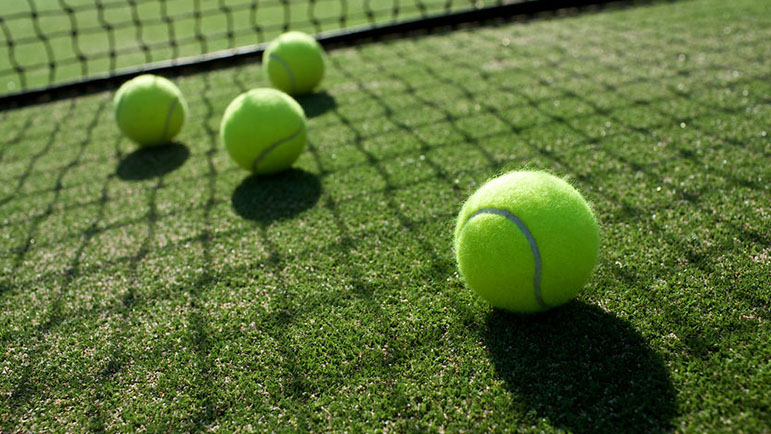
Grass courts are the fastest surface in tennis but also the least common. Wimbledon is the most famous grass-court tournament, and grass surfaces are known for their low bounce and quick play.
- Speed: Grass is the fastest surface in tennis, allowing players less time to react to shots.
- Bounce: The ball stays low and skids off the grass, which can make it difficult for players who rely on high-bouncing groundstrokes. It favours players who hit flat shots and have a strong serve.
- Slippery Surface: Grass courts can be slippery, especially when wet, leading to less predictable bounces and footing challenges for players.
- Player Performance on Grass Courts: Grass courts favour players with powerful serves, quick reflexes, and a good net game. Players like Roger Federer and Pete Sampras, known for their ability to serve and volley, have had immense success on grass. The fast pace and low bounce often neutralize heavy top-spin players, while big servers can dominate with fewer breaks of serve.
2. How to Factor Court Surfaces into Your Tennis Betting Strategy
When betting on tennis, understanding how a player’s game translates to a specific surface is essential. Here are some strategies to consider when placing your bets based on the surface:
Research Player Records on Specific Surfaces
Some players perform consistently across all surfaces, while others specialize on one type. For example, Rafael Nadal’s dominance on clay is unmatched, making him a favourite in clay-court tournaments. In contrast, players like John Isner and Milos Raonic, known for their big serves, tend to perform better on fast surfaces like grass.
Before placing a bet, look at a player’s head-to-head record and surface-specific stats. Some players may struggle on slower surfaces due to their style of play, while others may excel on quicker surfaces.
Consider Current Form and Surface Adaptability
While a player’s historical performance on a particular surface is important, so is their current form. Players who have been playing well on a specific surface may carry that momentum into their next match, even if they aren’t traditionally strong on that surface. Additionally, some players adapt well across multiple surfaces, while others may struggle to transition, especially when moving from a fast to a slow surface or vice versa.
For example, after a long hard-court season, players may need time to adjust to the slower clay courts. Keeping track of how quickly players adapt to surface changes can give you an edge in tennis betting online.
Look for Betting Value in Early Rounds
In tournaments like Wimbledon or the French Open, the early rounds often feature lopsided matchups between top seeds and lower-ranked players. However, if a top seed is known to struggle on a particular surface, there may be value in betting on an upset or on the underdog to win a set.
For example, a grass-court specialist ranked outside the top 10 may have a significant advantage over a top player who is more comfortable on clay or hard courts, making this an excellent opportunity for value betting.
Track Weather Conditions
Weather can significantly affect how a surface plays. Grass courts can become slippery after rain, and clay courts can become heavier, slowing down the ball even further. In hot conditions, hard courts can play faster due to the increased bounce. Always consider how the weather might impact the match and which players are best equipped to handle those conditions.
3. Key Player Traits to Watch Based on Surface
While understanding the characteristics of each surface is important, knowing which player traits are most advantageous on each surface can further refine your betting strategy.
- Hard Courts: Look for players with strong serves and solid baseline play. Players with good all-around games tend to perform well here, so consistency is key.
- Clay Courts: Focus on players with great endurance, defensive skills, and top-spin heavy groundstrokes. Players who excel in long rallies are often successful on clay.
- Grass Courts: Favor players with a big serve and aggressive net play. Serve-and-volley tactics work well on grass, and players with fast reactions and flat shots are often the ones to watch.
Final Thoughts
Betting on tennis requires a deep understanding of how different court surfaces affect player performance. The speed and bounce of the court can significantly influence match outcomes, and players often have surface-specific strengths and weaknesses that bettors should consider before placing a wager. By analysing past performances on hard, clay, and grass courts and factoring in current form, surface adaptability, and external conditions like weather, you can increase your chances of making successful bets.
So, whether you’re exploring tennis betting online for the first time or looking to refine your strategy, remember that the court surface plays a critical role in determining which players are most likely to succeed. Use this knowledge to make smarter bets and capitalize on the unique dynamics of each surface.
Article written by Alex