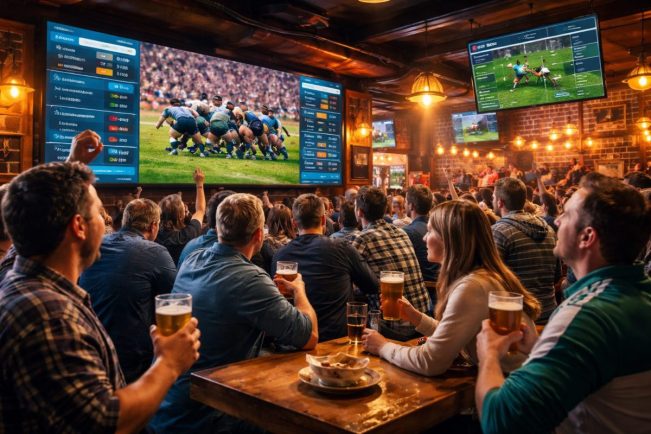
Technology is changing how local rugby fans experience key moments during matches, with real-time data now sitting alongside live viewing in pubs and community venues across Rugby and Warwickshire.
Rather than replacing the social side of match days, this added layer reshapes how moments are noticed, discussed, and shared during live play.
How the Match-Day Experience Has Changed in Rugby Town
Watching rugby in Rugby town has evolved beyond focusing solely on the pitch. Many pubs and clubs now provide additional match data alongside live broadcasts, allowing supporters to follow tackles, scrums, turnovers, and territory changes as they happen.
This additional context changes how fans talk about the game. Conversations move beyond reactions to tries and penalties and toward discussions about pressure phases, defensive patterns, and momentum swings. Supporters often replay key moments verbally, comparing what they saw on the pitch with what rugby match statistics confirm as the game unfolds.
The use of technology in rugby extends from professional competitions to grassroots levels, influencing how fans interact with the sport. Venues such as The Griffin and The William Webb Ellis show matches alongside updated statistics, creating shared talking points throughout the game.
When Momentum Shifts: The Science Behind Fan Reactions
Key moments such as unexpected tries, yellow cards, or decisive penalties often change the direction of a match. These shifts trigger visible reactions in local venues as the atmosphere responds instantly to changes on the field.
Live data amplifies these reactions. When updated figures appear immediately after a major play, fans often respond twice, first to the action itself and then to what the numbers reveal about control, pressure, or advantage.
Supporters tend to react more strongly when data confirms a perceived turning point. A sudden drop in territory or possession after a missed tackle can reinforce the feeling that the match has slipped away, even before the scoreboard changes. This response reflects the psychology of momentum in rugby, where emotional reactions often mirror shifts that statistics help make visible in real time.
Sarah Williams, manager at The Royal Oak in Rugby, observes this pattern closely. “When a big moment happens, the mood flips. With people checking updated stats and odds, there’s an added reaction when numbers confirm what everyone just saw.”
The Technology Driving Real-Time Engagement
Many local venues have adapted their viewing setups to reflect these habits. Screens now display possession, tackle counts, and territory shifts alongside live coverage, giving fans a clearer sense of how matches develop over time.
These displays help supporters follow long phases of play that might otherwise blend together. When momentum builds slowly rather than through a single event, data helps explain why one side begins to dominate.
Mobile apps have become part of the match-day routine. Supporters often keep devices open to follow tactical details, player changes, or injury updates while watching games with friends.
In some venues, real-time odds appear alongside match statistics, allowing fans to see how a single play changes expectations. This is where live betting becomes part of how certain supporters follow the flow of a match, adding another reference point without replacing the shared viewing experience.
How Real-Time Data Shapes Group Conversations
Access to live information has changed how groups experience matches together. Instead of relying on memory or opinion alone, fans often reference current numbers to support their views during discussions.
A disagreement over whether a team is under pressure may be resolved by checking territory or tackle counts. These shared reference points reduce debate friction and keep conversations focused on the game rather than speculation.
In mixed groups of experienced and casual fans, data also helps newer supporters follow the action more closely. Seeing visual indicators of momentum makes the match easier to understand without specialist knowledge.
This shared understanding strengthens the communal aspect of watching rugby in public spaces, keeping everyone engaged in the same unfolding story.
Community Impact of Match Moments
Major rugby matches continue to bring people together and support local businesses. Pubs often report larger crowds during high-profile games, especially when viewing setups allow fans to follow the action closely. These gatherings reflect wider football fan drinking traditions, where match-day rituals centre on shared viewing, conversation, and extended time spent in social venues rather than the result alone.
Extended match engagement often means supporters arrive earlier and stay later. Pre-match build-up and post-match analysis now form part of the overall experience, increasing dwell time and strengthening community interaction.
Better screens and real-time updates influence where fans choose to watch matches. Venues that offer clear viewing and additional match context often see stronger repeat visits, particularly during tournament periods.
Local Identity and Shared Rugby Culture
Rugby holds a strong place in the identity of the town of Rugby and surrounding Warwickshire communities. Watching matches together remains a social ritual, whether at major fixtures or during regular league games.
Technology has not replaced this tradition but layered onto it. Supporters still gather to share reactions, celebrate wins, and process defeats together, with digital tools supporting rather than dominating the experience. This balance reflects how the rugby matchday experience continues to centre on shared presence, familiar venues, and collective emotion across Rugby and the surrounding Warwickshire communities.
Local clubs and pubs act as informal meeting points, reinforcing relationships that extend beyond match days. Familiar faces, repeated routines, and shared emotional highs help maintain rugby’s role as a social anchor.
Responsible Engagement: Balancing Technology and Tradition
As digital features become more common, venues focus on maintaining rugby’s social character. Many aim to balance technology with spaces that preserve a traditional viewing experience.
The Webb Ellis Rugby Football Museum reflects this approach by combining historical exhibits with modern digital elements. Visitors can explore rugby’s origins while seeing how today’s fans engage with matches, highlighting how technology supports rugby fan behaviour without replacing the social traditions that define the sport.
Technology has reshaped how rugby fans in Rugby and Warwickshire experience match moments, adding real-time context to shared viewing without weakening the social core of the sport. As long as technology supports connection rather than distraction, match-day culture in Rugby continues to thrive through shared moments, familiar spaces, and collective emotion.