As summer begins and gardens burst into life across the country, wildlife experts are encouraging people to take a few simple steps that could make a real difference to the birds, bees and other creatures that share our towns, villages and countryside.
June is one of the busiest times of year for British wildlife. Young birds are leaving their nests, bees and butterflies are gathering food at their busiest rate, and hedgehogs are raising young. While nature is remarkably resilient, many species face increasing challenges from habitat loss, changing weather patterns and periods of hot, dry weather.
Fortunately, helping local wildlife does not require a large garden or expensive equipment. In many cases, a few small changes can provide vital support.
One of the simplest and most effective things people can do is leave out fresh water.
While many people associate bird feeders with helping wildlife, access to clean drinking water can be even more important during warm weather. Birds use water not only for drinking but also for bathing, helping them keep their feathers in good condition.
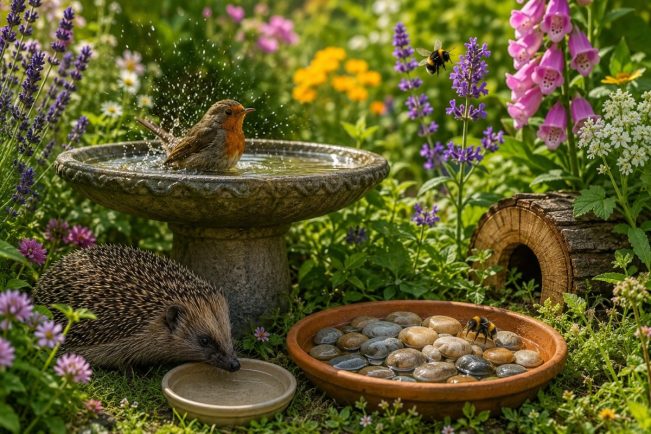
A shallow dish, bird bath or even a plant saucer filled with fresh water can provide a lifeline during dry spells. Wildlife charities recommend changing the water regularly to keep it clean and placing a few stones in the container to allow smaller creatures to climb out safely.
Bees and other pollinators can also struggle to find water during hot weather. A shallow bowl containing pebbles, marbles or small stones allows bees to drink safely without the risk of drowning.
Pollinators play a crucial role in Britain’s environment and food production. It is estimated that many of the fruits, vegetables and flowers we enjoy depend on insects such as bees for pollination. By providing water and planting nectar-rich flowers, gardeners can help support these important species.
Gardeners are also being encouraged to embrace a little untidiness.
Leaving a small patch of longer grass, allowing wildflowers to grow, or creating a quiet corner with logs and leaves can provide valuable shelter for insects, birds and small mammals. What might appear untidy to some people can be a thriving habitat for wildlife.
Hedgehogs, one of Britain’s most beloved animals, continue to face significant challenges. Their numbers have declined dramatically in recent decades, making gardens increasingly important as places of refuge.
Experts recommend checking long grass before mowing, avoiding the use of harmful chemicals where possible, and leaving small gaps in fences to allow hedgehogs to move freely between gardens. A shallow dish of water can also be particularly helpful during warm weather.
This is also the time of year when many people encounter young birds on the ground and assume they have been abandoned.
In reality, many fledglings spend several days outside the nest while learning to fly. Their parents are often nearby and continue feeding them. Unless a bird is clearly injured or in immediate danger, wildlife organisations generally advise observing from a distance rather than intervening.
June evenings also offer a wonderful opportunity to reconnect with nature. From the songs of blackbirds and robins to the sight of bats emerging at dusk, much of Britain’s wildlife can be enjoyed from the comfort of a garden, local park or village green.
With many species facing growing pressures, conservationists say that even small actions, multiplied across thousands of households, can have a significant impact.
A bowl of fresh water, a few wildflowers, or a corner left undisturbed may seem like modest gestures, but for a thirsty bird, a struggling bee or a wandering hedgehog, they could make all the difference.
As summer unfolds, residents are being encouraged to take a moment to look beyond their garden fences and remember that even the smallest spaces can play a part in helping Britain’s wildlife thrive.
Image: For illustration purposes