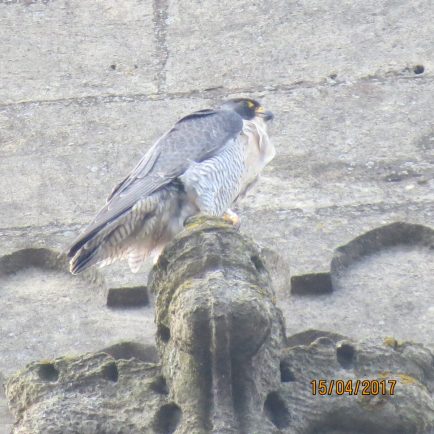
A ‘MAGNIFICENT’ bird of prey which made its home in Rugby has been shot.
The peregrine falcon, one of a nesting pair which had been living on the steeple of St Andrews Church for some years, was found dead in the town centre.
After being x-rayed by Rainsbrook Vets and sent for post-mortem, the cause of death appeared to be collision with a building.
But the rare and protected bird was found to have a historic shot wound, so had previously been shot at some point in its life.
A spokesperson for the Royal Society for the Protection of Birds (RSPB) said: “Although this peregrine falcon died from natural causes, the post mortem revealed that it had previously been shot at some point in its life.
“Despite being protected by law, these magnificent birds are absent from large areas of the country because they continue to be illegally killed.”
Warwickshire Police received a call about a peregrine falcon being shot in the town centre.
Wildlife crime officer Sgt Stuart Baker said: “Warwickshire Police take all types of wildlife crime seriously.
“Peregrine Falcons are rare species protected in law as Schedule 1 birds and are therefore offered additional protection at all times by the Wildlife and Countryside Act 1981.
“It is clear from the RSPB investigation into the killing of this bird that at some point in the past, somebody has deliberately shot this bird causing it serious injury.
“I would encourage anyone with any information to contact us or the RSPB if you have any information in relation to this offence.”
Peregrine falcons are recognised as the fastest animal on earth, reaching speeds over 200mph when diving after prey.
The UK population suffered a significant decline around the 1960s due to increased use of pesticides, though subsequent breeding programmes and protective legislation has seen their numbers increase.
Peregrine falcons have been protected by law since 1954, and anyone found guilty of an offence faces a maximum of six months in prison and/or a £5,000 fine.
Call police on 101 to report wildlife crimes, or contact Crimestoppers anonymously on 0800 555 111.