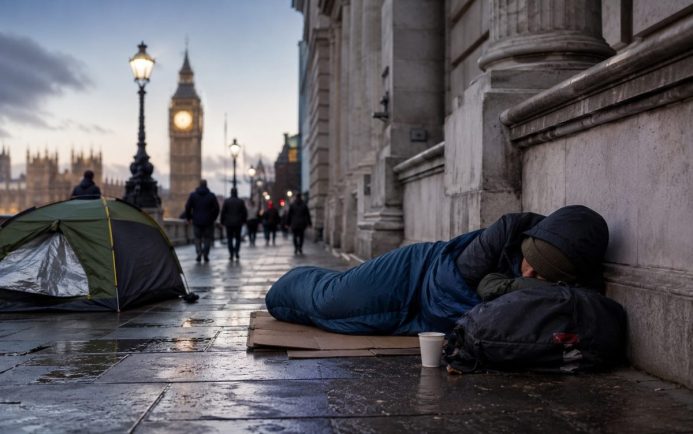
People sleeping rough on the streets of England and Wales can no longer be arrested or prosecuted simply for being homeless after the Labour Government formally repealed the Vagrancy Act this week.
The historic legislation, first introduced in 1824, was officially removed from the statute book on 29 June 2026, ending more than two centuries during which rough sleeping and begging could be treated as criminal offences.
The move means that sleeping in a tent, doorway or other public place is no longer, in itself, a criminal offence. Supporters of the repeal argue that homelessness should be treated as a social issue rather than a matter for the criminal justice system. Critics, however, have raised concerns that local authorities and police may now find it harder to deal with encampments and street disorder in some areas.
The Vagrancy Act was introduced in the aftermath of the Napoleonic Wars and was originally intended to deal with rising levels of poverty and homelessness. Over time it became increasingly controversial, with campaigners arguing that it punished vulnerable people for circumstances often beyond their control.
Although prosecutions under the Act had fallen significantly in recent years, it continued to provide powers to move rough sleepers on, issue fines and, in some cases, secure criminal convictions. Charities argued that the threat of enforcement often pushed homeless people away from support services rather than helping them access assistance.
Critics argue Labour risks normalising visible street encampments at a time when rough sleeping is already rising. Conservatives have previously warned that removing enforcement powers could contribute to “San Francisco-style tent cities” appearing in Britain, while former Home Secretary Suella Braverman cautioned against allowing streets to be “taken over by rows of tents”.
Shadow Home Secretary Chris Philp has also highlighted concerns over migrant encampments in central London and questioned whether authorities have sufficient powers to deal with persistent street camps.
However, Housing Secretary Steve Reed said the repeal marked a shift from punishment to prevention, arguing that homeless people need support rather than criminal sanctions. The Government has linked the change to its wider strategy aimed at reducing homelessness and increasing access to long-term housing.
Ministers have stressed that the repeal does not remove all powers available to police and councils. Authorities can still use anti-social behaviour legislation, public order laws and other enforcement measures where individuals are causing nuisance, harassment, intimidation or criminal activity. New provisions in the Crime and Policing Act are also intended to target organised begging gangs and exploitative behaviour.
The repeal was welcomed by homelessness organisations including the charities Crisis, St Mungo’s and Homeless Link, which described the change as a landmark moment after decades of campaigning. They argue that criminalising rough sleeping failed to address the underlying causes of homelessness and often made it harder for people to access help.
The legislation’s abolition brings England and Wales into line with Scotland, where similar laws were repealed years ago. Supporters see it as the end of an outdated Victorian-era approach, while critics argue the change could create fresh challenges for councils already struggling with rising homelessness and pressure on public services.
What is clear is that, from now on, sleeping rough alone is no longer a criminal offence in England and Wales. Whether the policy leads to more people on the streets or changes how authorities respond to homelessness will become apparent in the years ahead.
What do you think? Has the Government rightly consigned an outdated Victorian law to history, or does the repeal risk encouraging more tents on Britain’s streets? Share your views in the comments.