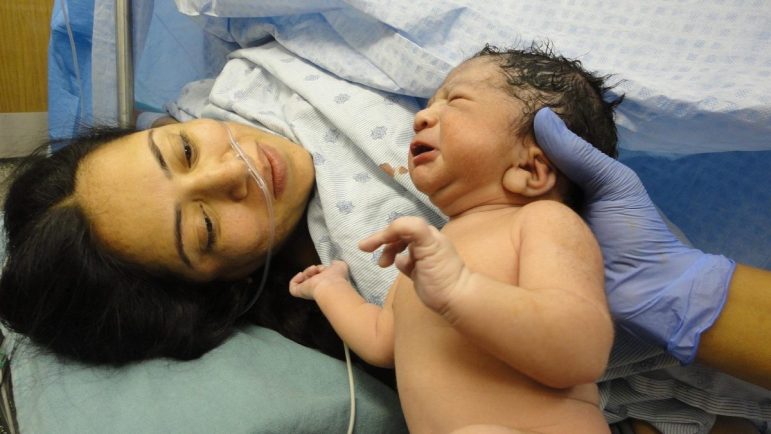
The Government has pledged urgent action to improve maternity services in England after an independent review concluded that the current system is failing too many women and families.
The report, led by Baroness Valerie Amos and commissioned by the Department of Health and Social Care, found widespread concerns about the quality, consistency and compassion of maternity care across England. It concluded that the system was often fragmented, slow to learn from mistakes and too frequently failed to listen to women when they raised concerns.
Ministers have now promised to move quickly on a series of recommendations, including the creation of a new national maternity and neonatal commissioner to oversee improvements.
The review was launched following a series of high-profile maternity scandals across England, including investigations into services at Shrewsbury and Telford, East Kent, Morecambe Bay and Nottingham, where repeated failures in care have been linked to avoidable deaths and serious injuries affecting mothers and babies.
Baroness Amos’s team gathered evidence from more than 450 families and visited 12 NHS trusts as part of the review.
The report concluded that many women felt they were not being listened to, heard or believed when they raised concerns about their pregnancy or labour. It also found significant variation in standards of care between hospitals and regions.
Speaking about the findings, Baroness Amos said maternity services were currently “not fit for the now and not fit for the future”.
Among the most urgent recommendations is a major overhaul of maternity triage services. The review found that maternity triage departments are increasingly acting as the equivalent of accident and emergency units for pregnant women, often under considerable pressure.
The report recommends that specialist midwives should answer calls, provide timely advice and ensure women who remain concerned are offered face-to-face assessments. The review stated that implementing these changes could save lives and reduce harm.
The investigation also highlighted concerns around racism, discrimination and inequality within maternity care. Black women in the UK continue to face significantly higher risks during pregnancy and childbirth than white women. According to the latest data from the NHS and the charity MBRRACE-UK, Black women are around three times more likely to die during pregnancy or shortly after childbirth than white women, while women from Asian backgrounds also face elevated risks.
Baroness Amos said disparities in outcomes should be treated as a patient safety issue and monitored more closely by NHS leadership teams.
The review’s eight recommendations include the appointment of a national maternity commissioner, improved listening to women and families, stronger accountability and regulation, better leadership, modern digital systems and clearer national standards for maternity and neonatal care.
However, some campaign groups and bereaved families expressed disappointment at the findings.
The Birth Trauma Association said the report represented a missed opportunity to address issues such as injuries caused during forceps deliveries and the long-term impact of post-traumatic stress on mothers and their partners.
Meanwhile, the Maternity Safety Alliance, which has been campaigning for a statutory public inquiry into maternity failures, criticised the proposal for a maternity commissioner.
Emily Barley, co-founder of the group, whose daughter Beatrice died at Barnsley Hospital in 2022, argued that placing responsibility for reform in the hands of a single individual risked concentrating too much power in one role.
Questions have also been raised about whether a new commissioner alone can deliver the scale of change required.
Donna Ockenden, who led the investigation into maternity failings at Nottingham University Hospitals NHS Trust and previously examined services in Shrewsbury and Telford, said she was disappointed that many of the problems identified were issues that had been highlighted repeatedly in previous inquiries.
Her Nottingham review, published in 2025, identified more than 2,500 cases of concern and was described as the largest maternity investigation in NHS history.
Dr Bill Kirkup, who has led previous inquiries into maternity failures at Morecambe Bay and East Kent, reportedly resigned as one of the review’s clinical advisers following disagreements over some of its conclusions.
Despite the criticism, many campaigners welcomed the report’s recognition that listening to women must be viewed as a core patient safety issue rather than simply a matter of patient experience.
The Government has described the review as a landmark investigation and says it will publish a national maternity action plan by December. Ministers have also announced £41 million of additional funding aimed at improving safety in maternity and neonatal services.
Approximately 600,000 babies are born in England each year. While the vast majority of pregnancies and births are completed safely, the review concludes that significant reforms are needed if public confidence in maternity services is to be restored and future tragedies prevented.