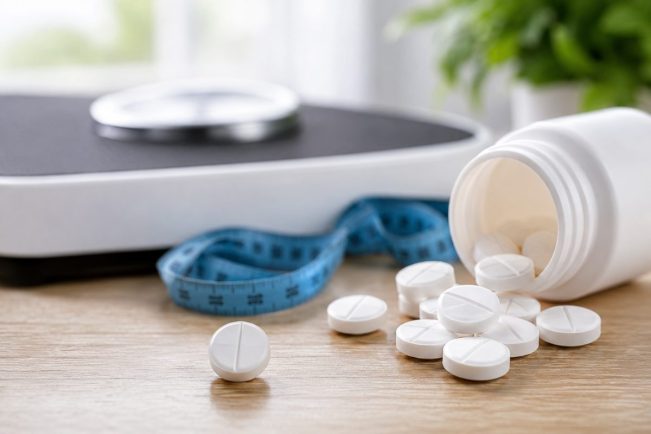
One in eight Britons could be using weight-loss medication by next year, according to a new report which predicts the number of adults taking GLP-1 drugs will more than double to seven million.
Analysis by consulting firm PwC Strategy& forecasts that the number of UK adults using glucagon-like peptide-1 (GLP-1) medications will rise from around three million today to seven million by 2027, equivalent to approximately 13 per cent of the population.
The projected growth is expected to be driven in part by the recent approval of a tablet version of the weight-loss drug Wegovy, which could make treatment more accessible by removing the need for weekly injections.
The Medicines and Healthcare products Regulatory Agency (MHRA) recently approved the first oral GLP-1 medicine in the UK specifically for weight management in adults with obesity. The drug works by mimicking hormones that help regulate appetite and food intake.
The treatment is expected to become available through a number of major pharmacies and retailers. However, it is not yet available on the NHS and must first be assessed by the National Institute for Health and Care Excellence (NICE) before any decision is made on wider NHS use.
According to PwC Strategy&, the growing popularity of weight-loss medication could have a significant impact on consumer spending habits.
A survey of more than 2,300 adults found that people taking GLP-1 medications reported spending considerably less on snacks, confectionery and sugary drinks. Users said they reduced spending on sweet treats by around 70 per cent and cut spending on sugary beverages by approximately 60 per cent.
At the same time, spending on healthier products increased. GLP-1 users reported spending more on fresh food, high-protein products, vitamins and supplements. They also spent more on fitness-related activities and clothing.
The report suggests that many of these lifestyle changes may continue even after treatment ends. More than 80 per cent of former users surveyed said they had maintained at least some of the dietary habits they adopted while taking the medication.
Jacqueline Windsor, head of retail at PwC UK, said the rapid growth of the market would reshape consumer behaviour and create new challenges for retailers and manufacturers.
She said:
“GLP-1 is the most consumerised medication today. Who your GLP-1 customers are, and how your category changes, will dictate how brands and retailers compete.
“We’ll see consumer businesses reshape their portfolios to manage near-term risk.”
The report also found that demand for the drugs appears relatively resilient despite ongoing economic pressures. More than a quarter of current users said they would maintain their existing level of spending on the medication even if the cost of living increased further.
Use of GLP-1 treatments has so far been highest among women and higher-income households. Women account for around 60 per cent of current users, while uptake among lower-income households remains comparatively low.
Although NHS prescriptions remain restricted to patients who meet specific clinical criteria, the arrival of oral treatments is expected to broaden access and further increase demand in the coming years.
Medical experts continue to stress that weight-loss drugs are not a substitute for a healthy lifestyle and should be used under appropriate medical supervision. Anyone considering treatment is advised to consult a GP or qualified healthcare professional to discuss whether the medication is suitable for them.